

Blog
New Tennessee Liquor Laws for 2026
Published: Jul 2, 2026
The 114th Tennessee General Assembly wrapped up a busy legislative session, and the liquor industry saw significant changes. Below is a summary of key liquor legislation that passed in 2026.
Most of these laws became effective July 1, 2026.
Drinks on the Green:
Grab your clubs and cocktails. Tennessee has made it easier to serve alcoholic beverages on golf courses.
For years, the Tennessee ABC generally prohibited alcohol from being carried onto the golf courses with a restaurant or limited-service restaurant license. Enforcement of this rule was inconsistent.
Section 2 of PC 999 aims to fix that. Golf courses can now serve alcohol.
Or can they?
The law replaces “golf driving ranges” with “golf courses,” letting qualifying restaurants, limited-service restaurants, and hotels serve alcohol in entertainment areas. And yes, golfers can now take their drinks on the course with them.
But here’s the catch: the entertainment area must have table service or be within “close observation distance” from the bar. That’s a tall order for most golf courses, where players are scattered across 18 holes instead of sitting at tables.
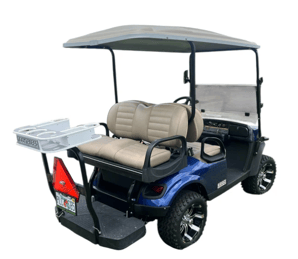
Does this count as table service? Docktail Butler Golf Cart Cup Holder & Table
We’ll find out soon enough.
Here is the text of the new law: “A licensee who qualifies for a restaurant license, limited service restaurant license, or hotel license may also serve alcoholic beverages in any area of the premises designated on the application that is used for the purpose of entertainment activities. Entertainment activities may include, but are not limited to, bowling, billiards, games, auditoriums, darts, or golf courses. Any area used for entertainment activities shall have table service or be within close observation distance from the service area of the facility as determined by the commission.”
How will the Tennessee ABC actually enforce this law for golf courses? That remains to be seen.
Barbershop and Salon Saloons:
No haircut? No problem. Barber shops and salons can now serve drinks to anyone who walks in, no trim, manicure, or makeover required. Section 3 of PC 999 allows barbershops and cosmetology shops with a restricted retail license to serve alcohol to patrons without purchasing a service.
A “restricted retail business” is a licensed barbershop or cosmetology shop that provides food service, has no more than 20 seats, and keeps alcohol sales under 15% of annual gross revenue.
These businesses can now serve drinks to anyone who walks in, not just the person in the chair getting a haircut or manicure. Waiting for a friend? Browsing? Just hanging out? You can still grab a drink.
Even better, the law treats alcohol service as an accessory use. That means no extra business classifications, no special occupancy permits, and no separate serving areas required. Less red tape, more flexibility. At least that seems to be the goal of the law.
Bottling is now Manufacturing:
Bottling distilled spirits now counts as manufacturing. Why does that matter? Because manufacturing laws come with a perk: a distillery can sell bottles and drinks of spirits manufactured at the distillery. The new law makes it easier for distilleries.
Here’s the breakdown. Under the old law the distillery had to brew beer, distill spirits, or operate a winery. This bill adds a new category: bottling distilled spirits now qualifies as “manufacturing.”
Translation? You don’t have to distill on-site anymore to sell at retail, just bottle there. That makes way for more flexibility. Distill at one location, bottle at another, sell at both. Simple as that.
Tennessee Tequila Bill:
Tennessee law now lets manufacturers sell tequila. Before PC 603, manufacturers could only retail and sample products they made or distilled on-site. That’s changed.
Remember Alan Jackson’s “There’s Mexico, Tequila, and Me”? Tennessee distilleries can finally sing along.
“Well I'm tired of the rat-race
Even tired of her sweet face
I'm sick of what I'm supposed to be
I need a little time to vegetate my mind
Escape from my reality
Just Mexico, Tequila and me”
Now, a distillery can sample and sell any product it owns the intellectual property rights to, if the tequila is made and bottled in Mexico.
How does this work? Picture this: a Tennessee distillery owns a tequila brand. The tequila has to be made in Mexico (federal import rules and Mexican Consejo Regulador del Tequila standards require it). Under the old rules, the Tennessee distillery couldn’t sell or sample the tequila on-site.
Now? The distillery can sell the tequila on-site.
If you’re a Tennessee manufacturer with your own tequila brand, you can now pour that Mexican-bottled tequila right at your facility. The label still states that the tequila comes from Mexico with the importer information, that part doesn’t change, but your retail options can now include tequila.
Drink Spiking Outlawed
Tennessee made it a Class D felony to spike someone’s drink, food, or medication with a roofie or other date rape drug, punishable by two to twelve years in prison and fines up to $5,000. For more details, read our full post here: Tennessee Outlaws Drink Spiking: New Felony Law 2026
Liquor Omnibus Bill
Every year, Tennessee passes a liquor omnibus bill selecting businesses to get liquor-by-the-drink licenses. This year, the bill opened doors for liquor licenses at 29 businesses across the state.
Vape Update Bill:
Tennessee has expanded vape-related definitions to bring more products under advertising restrictions that prohibit marketing to individuals under 21. “Consumable material” now includes natural or synthetic liquid nicotine. And “vapor product” has been expanded to cover any noncombustible product that uses a battery, heating element, or similar tech to create vapor.
What does this mean in practice? Synthetic nicotine vape liquids, devices, cartridges, and containers are all now under Tennessee’s vapor-product umbrella. If you’re in this industry, more of your products will face the same advertising and sales restrictions that already apply to traditional nicotine vapes when it comes to selling to individuals under 21.
One more thing to keep on your radar: the bill also clarifies that certain fines for violations are issued by the Tennessee Alcoholic Beverage Commission.
THC Vape Tax Bill:
THC vapes are about to get more expensive.
Starting July 1, 2026, inhalable liquid hemp-derived cannabinoid products (HDCPs) - think THC vape pens and liquid cartridges - get slapped with a new 10% tax on wholesale cost. And here’s the kicker: 10% stacks on top of the $4.40 per gallon wholesale tax. The Department of Revenue will update its HDCP wholesale tax return forms to report taxes from these products.
Celebrity Branding Bill
Tennessee made it more attractive for celebrities to do business in the Volunteer State. The new law allows celebrities to place a name-image-likeness license in trust and provide marketing support for the supplier or retailer, even while holding an ownership interest in another tier.
Tennessee law previously allowed trusts to be used to eliminate three-tier issues. The problem was that a celebrity could not promote the interest held in trust.
Under PC 917, a person whose interest is held in that trust can license their name, image, and likeness through the trust and appear in ads, promote through social media and make personal appearances for the brand. The celebrity can be paid either a flat fee or up to 10% of sales or profits. But the celebrity can't participate in the management or day-to-day operations.
The new law specifically protects the confidentiality of NIL agreements filed with the state. The law also shields celebrities from liability from the NIL placed in trust. The new law makes it clear that trusts apply to distilleries, wineries, and contract distilleries and wineries.
Tennessee has always been celebrity friendly, but this new law rolls out the red carpet for entertainers that want to capitalize on their name and likeness without getting involved in day-to-day operations of liquor businesses.
To-Go Cup Bill
Tennessee has introduced a new way to enjoy drinks at special events: the event “to-go” cup.
The law only applies to Nashville. Here’s how it works. Nashville can establish temporary “special event zones.” During approved events within these zones, you can buy a drink from a participating bar or restaurant and take it outside into the special event zone.
There are a few rules to keep in mind. You can only carry your drink within the designated event zone and only for the duration of the event. Your drink must also be in a special event cup purchased from the event permit holder, and the cup must be labeled to identify which business sold you the drink.
Special thanks to Emilie Claire Nason, a rising second-year law student at Vanderbilt University Law School and an Adams & Reese summer associate, for helping to co-author this post.